If you are planning to import goods from China to Israel, sea freight is a practical shipping option for many types of commercial cargo, especially large shipments, heavy products, and goods that do not require urgent delivery.
So, what cargo is suitable for sea freight to Israel?
Most general commercial products can be transported by sea, including industrial machinery, furniture, construction materials, electronics, household products, textiles, and wholesale merchandise. However, some products require special shipping arrangements, dangerous goods documentation, import permits, or compliance with Israeli regulations.
Before arranging a shipment, it is important to understand your cargo type, packaging, shipping requirements, and Israeli import conditions.
This guide explains which goods are suitable for sea freight to Israel, what additional requirements may apply, and what you should prepare before shipping from China.
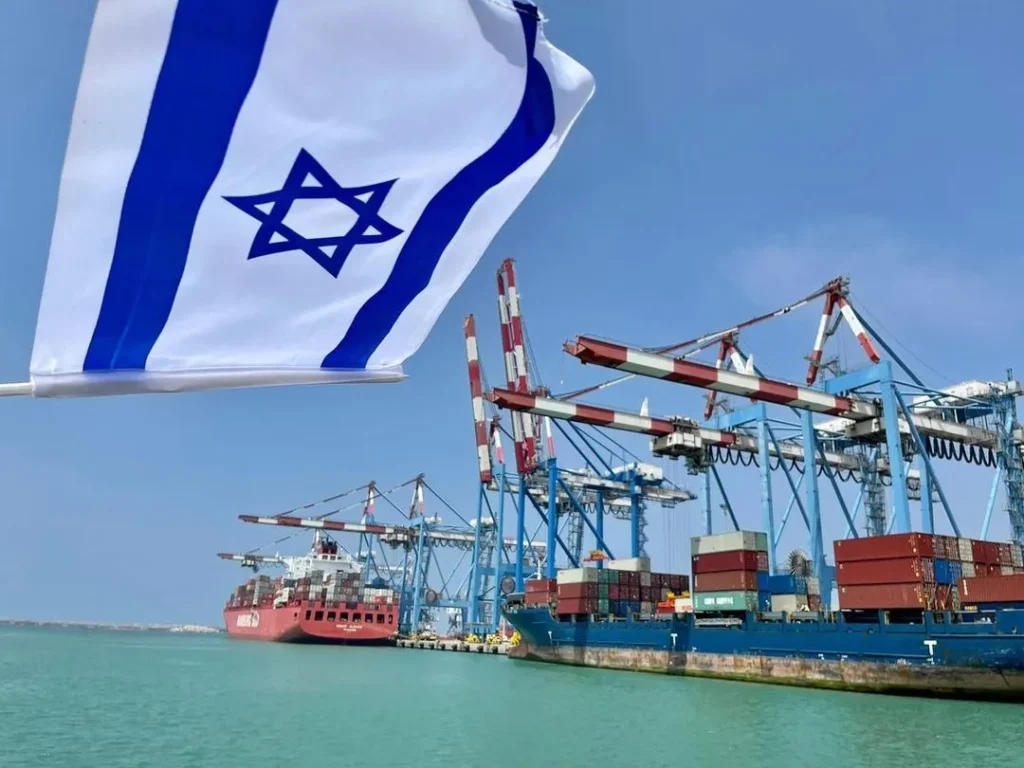
1. What Types of Cargo Are Suitable for Sea Freight to Israel?
Sea freight is suitable for a wide range of commercial products. The most important considerations are the cargo’s physical characteristics, shipping volume, handling requirements, and import regulations.
Below are some common categories of goods that can generally be transported from China to Israel by sea, subject to carrier acceptance and applicable import requirements.
1.1 Industrial Machinery and Equipment
Industrial machinery and equipment are among the common categories of goods transported by sea from China to Israel.
Examples include:
- Manufacturing machinery and production equipment.
- CNC machines and metalworking equipment.
- Packaging and processing machinery.
- Agricultural machinery and equipment.
- Industrial tools and mechanical components.
- Factory spare parts and accessories.
Shipping considerations:
Machinery can be heavy, oversized, or sensitive to vibration and moisture. Before shipping, confirm the dimensions, gross weight, lifting points, and packaging requirements.
Wooden crates and pallets may be used for protection. Wooden packaging used in international trade should comply with applicable ISPM 15 requirements.
For oversized or unusually heavy machinery, an open-top, flat-rack, or other suitable container may need to be considered.
1.2 Furniture and Home Products
Furniture and household products are also suitable for sea freight, particularly for wholesalers, retailers, furniture distributors, and interior design companies importing from China.
Common examples include:
- Sofas, beds, and mattresses.
- Tables, chairs, and cabinets.
- Office furniture.
- Kitchen cabinets and storage systems.
- Lighting fixtures and decorative products.
- Bathroom accessories and home furnishings.
Shipping considerations:
Furniture can occupy significant container space, even when its actual weight is relatively low.
Flat-pack packaging and proper carton design can help improve container utilization. Fragile surfaces, glass components, and assembled furniture should receive suitable protective packaging.
For commercial furniture imports, check whether any applicable product standards or material-specific requirements apply.
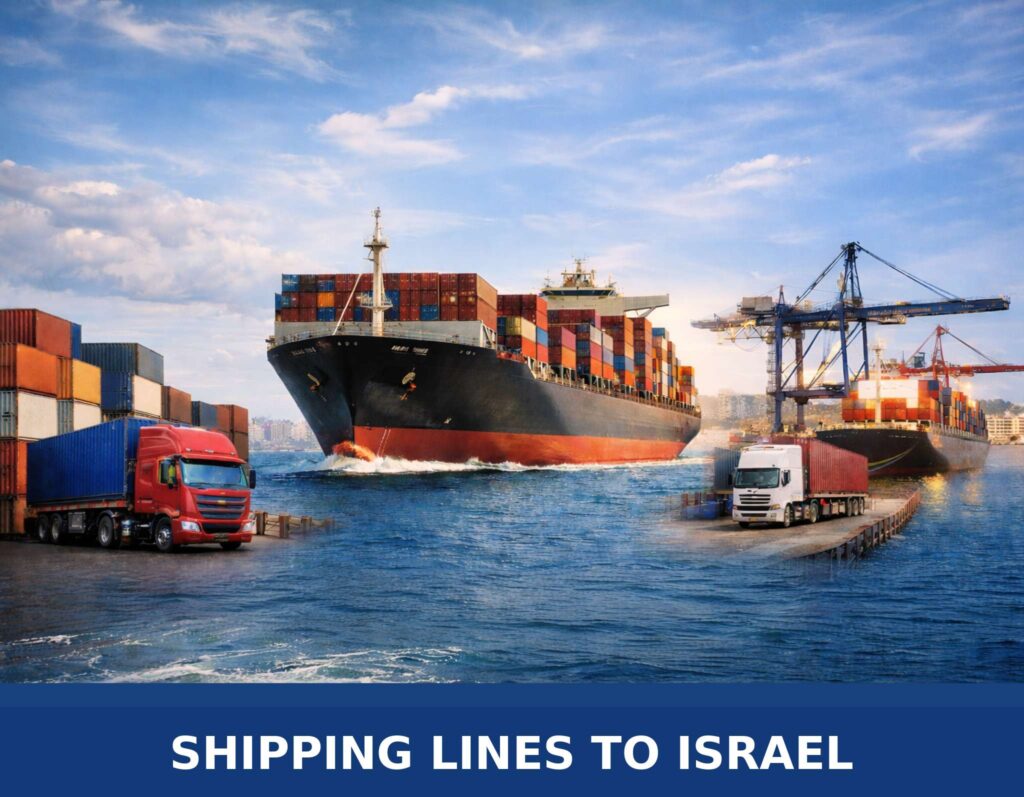
1.3 Construction Materials and Building Products
Construction materials are frequently purchased in bulk, making sea freight a suitable option for many construction and engineering projects.
Examples include:
- Ceramic tiles and stone products.
- Aluminum profiles and metal materials.
- Steel components and structural materials.
- Doors, windows, and hardware.
- Flooring and wall panels.
- Sanitary ware and bathroom fixtures.
- Pipes, fittings, and plumbing materials.
- Insulation and interior decoration materials.
Shipping considerations:
Some construction materials are heavy and require careful weight distribution inside the container.
Glass, ceramic tiles, stone, and sanitary ware need suitable packaging to prevent damage during handling and transportation.
For products subject to Israeli mandatory standards or other technical regulations, importers should confirm the applicable compliance requirements before shipment.
1.4 Electronics and Electrical Products
Many electronics and electrical products can be transported by sea, including commercial and industrial products.
Examples include:
- Computers and computer accessories.
- Monitors and display equipment.
- Cables and wiring products.
- Electrical switches and sockets.
- Lighting equipment.
- Industrial control systems.
- Electronic components.
- Household electrical appliances.
Shipping considerations:
Electronics should be protected against moisture, static electricity, impact, and excessive handling.
Some products contain lithium batteries or other regulated components. These may be classified as dangerous goods or subject to specific transport provisions, depending on their design and configuration.
Importers should also check whether the products require Israeli standards compliance, testing, declarations, or other approvals.
1.5 Textiles, Clothing, and Wholesale Merchandise
Textiles and general merchandise are particularly suitable for sea freight when importers purchase in bulk.
Examples include:
- Clothing and footwear.
- Fabrics and textile materials.
- Bags and accessories.
- Bedding and household textiles.
- Curtains and carpets.
- Promotional products.
- General retail merchandise.
Shipping considerations:
These products are generally straightforward to pack and consolidate, provided that they are correctly declared and do not contain restricted materials or other regulated components.
Good carton packaging, moisture protection, and accurate packing lists help reduce handling and customs issues.
1.6 Automotive Parts and Mechanical Components
Automotive parts and industrial mechanical components are another common category for international sea freight.
Examples include:
- Vehicle spare parts.
- Engine components.
- Mechanical assemblies.
- Metal fittings and fasteners.
- Vehicle accessories.
- Industrial bearings and transmission components.
- Workshop tools and equipment.
Shipping considerations:
The cargo description should clearly identify the product and its intended use.
Certain automotive products, such as batteries, airbags, chemicals, and some vehicle-related equipment, may require additional dangerous goods assessment or regulatory checks.
Importers should confirm the exact product specifications and HS Code with their customs broker.
2. Which Goods Require Special Shipping Arrangements?
Not all cargo can be handled as ordinary general cargo.
Some products may still be transported by sea, but they require additional documentation, packaging, carrier approval, or regulatory authorization.
The following categories should be checked before booking.
2.1 Lithium Batteries and Battery-Powered Products
Lithium batteries are commonly found in:
- Electric bicycles and electric scooters.
- Power banks.
- Portable electronic devices.
- Battery-powered tools.
- Energy storage systems.
- Industrial battery equipment.
These products may fall under dangerous goods regulations depending on battery chemistry, capacity, configuration, and how the batteries are packed or installed.
Before arranging shipment, prepare the relevant information:
- Battery type and chemistry.
- Watt-hour (Wh) rating or other applicable technical specifications.
- UN 38.3 test summary, where applicable.
- Safety Data Sheet (SDS), where relevant.
- Product specifications and photographs.
- Battery packaging and installation details.
Important: A battery-powered product is not automatically accepted as ordinary cargo. The shipping classification must be checked before booking.
2.2 Chemicals, Paints, and Flammable Products
Some chemicals and industrial products may be classified as dangerous goods under the IMDG Code.
Examples include:
- Industrial chemicals.
- Certain paints and coatings.
- Solvents and adhesives.
- Flammable liquids.
- Certain cleaning agents.
- Aerosols and pressurized containers.
The exact classification depends on the product’s chemical composition and transport characteristics.
Depending on the cargo, additional requirements may include:
- Safety Data Sheet (SDS).
- UN Number and proper shipping name.
- Dangerous goods declaration.
- Approved packaging.
- Hazard labels and markings.
- Carrier acceptance.
Some products may not be accepted by every shipping line or on every service.
Do not arrange shipment based only on a general product name. Have the product assessed before booking.
2.3 Food, Agricultural, and Animal-Origin Products
Food and agricultural products may be transported by sea, but their import requirements need to be checked carefully.
Examples include:
- Packaged food products.
- Food ingredients.
- Agricultural products.
- Certain animal-origin products.
- Frozen or temperature-sensitive food.
Depending on the product, Israeli authorities may require importer registration, health certificates, veterinary or phytosanitary documentation, import permits, or other approvals.
Perishable goods may also require refrigerated containers (reefers), temperature monitoring, and suitable handling arrangements.
Importers should confirm that the product is legally eligible for import into Israel before the goods leave China.
2.4 Medical Products and Regulated Equipment
Medical devices, pharmaceutical products, and certain healthcare-related goods may require regulatory approval or additional documentation.
Examples include:
- Medical devices.
- Laboratory equipment.
- Diagnostic instruments.
- Pharmaceutical products.
- Certain healthcare supplies.
Their transport suitability and import eligibility are two separate issues.
Even if a product can physically be transported by sea, the Israeli importer may need approval from the relevant authority before customs clearance.
Confirm the product classification, importer eligibility, and applicable approvals before shipping.
2.5 Oversized and Heavy Cargo
Large industrial equipment, steel structures, production lines, and other oversized cargo can often be transported by sea with suitable equipment and loading arrangements.
Depending on the dimensions and weight, possible solutions include:
- Standard dry containers.
- Open-top containers.
- Flat-rack containers.
- Other specialized shipping arrangements.
Before requesting a quotation, provide the exact dimensions and gross weight, together with photographs and loading requirements.
Not every oversized shipment can fit into a standard container. The shipping line, loading port, destination port, and inland transportation arrangements must all be considered.
3. Which Goods May Be Restricted or Require Import Approval in Israel?
One important point for importers is that being suitable for sea transportation does not automatically mean a product is permitted to enter Israel.
Israel has specific import requirements covering product safety, technical standards, public health, environmental protection, and other regulatory matters.
The requirements depend on the actual product and its HS Code.
| Cargo category |
What should be checked before shipping? |
| General household products |
Product description, HS Code, applicable standards |
| Electrical appliances |
Electrical safety and applicable Israeli standards |
| Toys and children’s products |
Product safety and relevant conformity requirements |
| Food products |
Importer registration and food import approvals |
| Chemicals |
Dangerous goods classification and import permits |
| Medical products |
Relevant health authority approvals |
| Batteries |
Transport classification and carrier acceptance |
| Agricultural products |
Phytosanitary or other agricultural approvals |
| Animal-origin products |
Veterinary and health requirements |
Check the HS Code Before Shipping
The HS Code is essential for determining the import conditions applicable to a product.
It helps identify:
- Applicable customs duties and purchase taxes.
- Whether an import license or permit is required.
- Whether mandatory standards apply.
- Whether additional regulatory documents are needed.
- Whether specific import restrictions apply.
The Israel Tax Authority provides an official customs tariff and purchase tax system for checking product classification and applicable requirements.
For products subject to mandatory standards, importers should also consult the Israeli Ministry of Economy and Industry.
Do not rely only on a supplier’s HS Code. The final classification should be confirmed with a qualified customs broker.
4. What Should You Prepare Before Shipping Cargo from China to Israel?
Once you have confirmed that your goods are suitable for sea freight and can be imported into Israel, the next step is to prepare accurate cargo information.
This helps your freight forwarder assess the shipping method, container requirements, and estimated transportation costs.
Step 1: Confirm the Product Details
Ask your supplier to provide:
- Product name and detailed description.
- Product photos or catalogue.
- HS Code, if available.
- Material and intended use.
- Whether the product contains batteries, liquids, chemicals, or other regulated components.
- Country of origin.
Avoid using descriptions that are too general, such as “accessories,” “parts,” or “general goods.”
A clear product description makes it easier to assess shipping and customs requirements.
Step 2: Confirm Cargo Dimensions and Weight
Request the following information from your supplier:
| Information |
What to provide |
| Total quantity |
Number of cartons, pallets, or packages |
| Package dimensions |
Length × Width × Height |
| Gross weight |
Total weight including packaging |
| Total volume |
Cargo volume in CBM |
| Packaging type |
Cartons, wooden crates, pallets, or other packaging |
| Loading condition |
Stackable, fragile, oversized, or non-stackable |
These details help determine whether LCL or FCL shipping is more suitable.
Step 3: Confirm Import Requirements with the Israeli Importer
Before the cargo is dispatched, the Israeli importer should confirm:
- Correct HS Code.
- Applicable customs duties and taxes.
- Required import permits or licenses.
- Mandatory standards or product compliance requirements.
- Any special documentation required by relevant authorities.
- Whether the importer is eligible to import the goods.
For regulated products, do not wait until the cargo arrives at the destination port to check whether an approval is needed.
Step 4: Choose the Appropriate Sea Freight Solution
There are two common options for commercial sea freight from China to Israel.
LCL (Less than Container Load)
LCL is suitable when your cargo does not occupy a full container.
Your goods are consolidated with shipments from other customers in a shared container.
It may be appropriate for:
- Small and medium-sized shipments.
- Sample orders.
- Regular wholesale purchases.
- Businesses testing new products in the Israeli market.
FCL (Full Container Load)
FCL is suitable when you have enough cargo to use a dedicated container.
Common container options include:
- 20-foot containers.
- 40-foot containers.
- 40-foot High Cube containers.
FCL may be suitable for large orders, heavy machinery, bulk building materials, and regular commercial imports.
The most appropriate option depends on cargo volume, weight, loading conditions, shipping costs, and destination handling requirements.
5. What Factors Affect Sea Freight Costs and Delivery Arrangements?
The cost and transportation arrangements for shipping cargo from China to Israel depend on several factors.
Cargo Volume and Weight
Larger shipments generally require more container space or a dedicated container.
For LCL shipments, the chargeable volume and weight calculation depends on the freight provider’s pricing rules.
Heavy cargo may also require additional loading, handling, or equipment arrangements.
Cargo Type and Special Handling
Ordinary general cargo is usually easier to arrange than regulated or specialized cargo.
Dangerous goods, battery-powered products, temperature-sensitive goods, fragile products, and oversized machinery may involve additional requirements and charges.
Origin and Destination Locations
The location of the supplier in China and the delivery address in Israel can affect:
- Domestic transportation costs.
- Export warehouse handling.
- Port handling charges.
- Destination transportation.
- Final delivery arrangements.
Cargo collected from different factories may also require consolidation before export.
Customs Clearance and Import Requirements
Import duties, purchase taxes, inspection fees, storage, and other clearance-related expenses depend on the product and the actual import process.
Some products may require additional approvals or inspections, which can affect the overall delivery schedule.
Shipping Schedules and Operational Conditions
Actual transit and delivery times depend on the selected shipping service, vessel schedule, port operations, transshipment arrangements, customs procedures, and other operational factors.
For this reason, it is better to request a shipment-specific quotation and schedule instead of relying on a general transit-time estimate.
6. Common Mistakes to Avoid When Shipping to Israel
Even when cargo is suitable for sea freight, mistakes before shipment can create unnecessary costs and delays.
Here are several issues importers should pay attention to.
6.1 Not Checking Import Requirements Before Shipment
A product may be acceptable for sea transportation but still require an Israeli import permit, certification, or regulatory approval.
What to do: Confirm the HS Code and applicable import requirements with your customs broker before dispatch.
6.2 Providing Inaccurate Product Descriptions
Descriptions such as “electronic products” or “machine parts” may not provide enough information for customs classification or dangerous goods assessment.
What to do: Provide detailed descriptions, product photographs, specifications, and material information.
6.3 Failing to Declare Batteries or Chemicals
Some suppliers may not clearly identify batteries, liquids, or chemical components in their cargo information.
This can create problems during shipping line acceptance and documentation checks.
What to do: Disclose all relevant components before booking and provide the required technical documents.
6.4 Underestimating Cargo Volume
Incorrect carton dimensions or incomplete packing information can lead to quotation changes and loading problems.
What to do: Ask your supplier for the final packing list and confirm the actual cargo dimensions and gross weight before shipment.
6.5 Assuming Customs Clearance Is Included in Every Shipping Quote
Different freight quotations may cover different services.
For example, a quotation may include ocean freight but exclude destination port charges, customs clearance, import taxes, or final delivery.
What to do: Confirm exactly what is included and excluded in the quotation before placing your shipping order.
7. Frequently Asked Questions About Sea Freight to Israel
Q1: What products can I ship from China to Israel by sea?
Most general commercial products can be shipped by sea, including machinery, furniture, electronics, construction materials, textiles, automotive parts, and household products.
However, restricted or regulated products may require additional documentation, import approvals, or special shipping arrangements.
Q2: Can I ship electronic products and lithium batteries to Israel?
Many electronic products and battery-powered items can be transported by sea, but lithium batteries may be subject to dangerous goods regulations.
Their transport classification depends on battery type, capacity, configuration, and packaging.
Always provide battery specifications and relevant documents before booking.
Q3: Can I ship chemicals, paint, or other dangerous goods to Israel?
Some chemicals and dangerous goods can be transported by sea under applicable IMDG requirements.
However, acceptance depends on the product’s classification, packaging, documentation, shipping line policies, and applicable import regulations.
You should provide the SDS and complete product information for assessment before arranging shipment.
Q4: Is LCL or FCL better for shipping to Israel?
LCL is generally suitable for smaller shipments that do not require a full container, while FCL is more appropriate for larger shipments.
The best option depends on cargo volume, weight, handling requirements, and the total cost of transportation.
Q5: Do I need an import license to ship goods to Israel?
Not every product requires the same approvals.
Some goods may be imported under general requirements, while others require specific permits, licenses, standards compliance, or authorization from relevant Israeli authorities.
The exact requirements should be checked using the product’s HS Code and detailed description.
Q6: Can ETA help arrange sea freight from China to Israel?
ETA provides China-to-Israel logistics services, including sea freight arrangements and related import logistics support.
To assess your shipment, provide the product details, cargo dimensions, gross weight, quantity, supplier location, and delivery address in Israel.
Our team can review the shipment information and help you identify an appropriate shipping arrangement.
Conclusion: Check Your Cargo Before Shipping to Israel
Sea freight is a practical transportation option for many commercial goods imported from China to Israel, including machinery, furniture, building materials, electronics, textiles, and wholesale merchandise.
However, choosing a shipping method is only one part of the import process. You should also check cargo classification, packaging, dangerous goods requirements, Israeli import regulations, and customs documentation before dispatch.
If you are unsure whether your products are suitable for sea freight to Israel, the best approach is to have your cargo information reviewed before booking.
Need to ship cargo from China to Israel?
Send ETA your product description, cargo quantity, dimensions, gross weight, supplier location in China, and delivery address in Israel.
Our team can review your requirements and help you find a suitable sea freight solution for your shipment.